This guide covers the most common danger-zone mistakes that trigger violations and the simple controls that prevent them.
What is the food temperature “danger zone”?
The danger zone is the temperature range where pathogens grow fastest: 41°F to 135°F (5°C to 57°C). When food sits in this range too long, bacteria can multiply to unsafe levels even if the food still looks and smells fine.
Most violations happen when time and temperature are not actively monitored, documented, or corrected.
Which foods are most likely to cause violations in the danger zone?
Violations are most common with TCS foods (Time/Temperature Control for Safety). These include cooked meats, poultry, seafood, dairy, eggs, cooked rice and pasta, cut leafy greens, cut melons, and many prepared foods.
If a kitchen handles large batches, preps in advance, or holds food on a line, food safety & quality and compliance management software can help ensure TCS items are monitored with tight controls and consistent documentation.
How does improper hot holding lead to health code issues?
Hot-held food must be kept at 135°F or higher. Violations appear when pans on steam tables are underfilled, lids are off, water levels are low, or equipment is not preheated.
A common error is treating a steam table as a reheating device. Hot holding maintains temperature; it does not reliably raise cold food to safe levels.
How does improper cold holding cause danger-zone violations?
Cold-held food must be maintained at 41°F or lower. Violations often come from overstocked reach-ins, frequent door opening, warm product loaded directly into coolers, or blocked airflow.
Another frequent mistake is using prep coolers beyond their design. If the unit is built for holding, not rapid chilling, it will struggle during busy service.
Why do cooling mistakes create some of the biggest risks?
Cooling is a top violation because it requires both speed and method. Cooked TCS food should cool from 135°F to 70°F within 2 hours, then from 70°F to 41°F within 4 more hours.
Common errors include cooling in deep containers, leaving food covered while hot, stacking pans, or placing hot pots directly into a walk-in where they warm the surrounding food.
What reheating errors commonly trigger violations?
Reheating for hot holding should reach 165°F quickly and then be held at 135°F or higher. Violations occur when kitchens reheat slowly on a steam table, warm food in low equipment settings, or skip temperature checks during rush periods.
If reheated food is not verified with a thermometer, they cannot prove it hit the required temperature.
How do thawing practices put food into the danger zone?
Improper thawing is a classic danger-zone issue. Violations happen when food is thawed on countertops, in standing water, or left overnight at room temperature.
Safer thawing methods include under refrigeration (41°F or below), under cold running water with proper drainage, or as part of the cooking process when the recipe supports it.
Why is time control without temperature control a frequent weak spot?
Some operations use “time as a public health control,” but violations occur when they fail to mark start times, track discard times, or train staff to follow the process.
When time control is used, food is typically discarded after a set period rather than returned to refrigeration. If the process is not written and consistent, inspectors often flag it.
How do thermometers and logs prevent danger-zone violations?
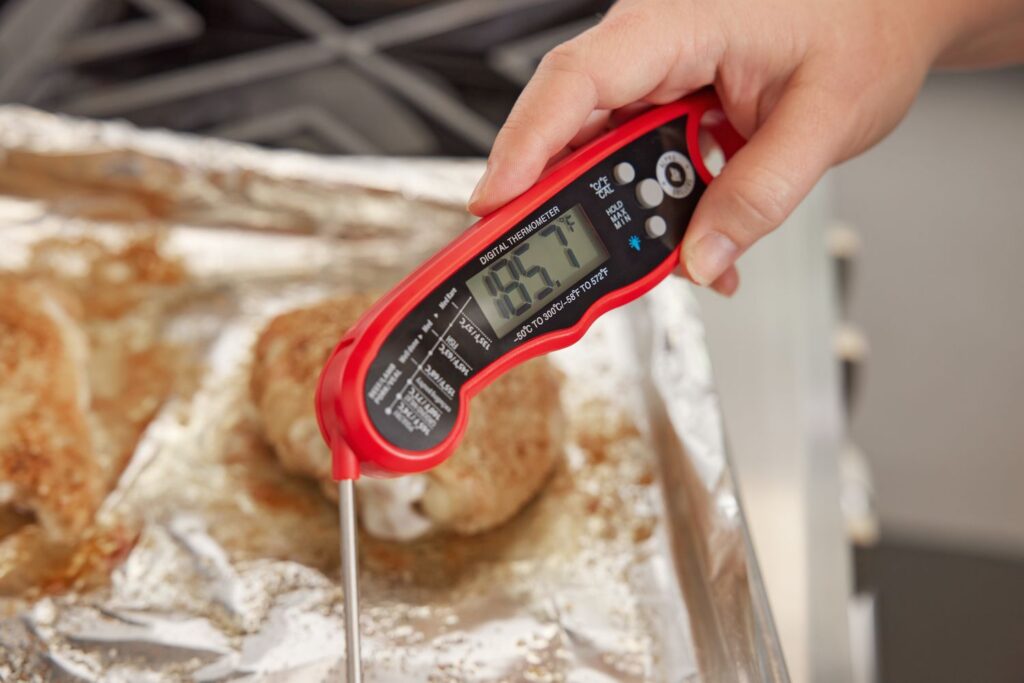
A kitchen can only manage what they measure. Violations often show up when thermometers are missing, not calibrated, used incorrectly, or not sanitized between uses.
Temperature logs help because they force routine checks and create a record of corrective actions. Without logs, staff may “assume” food is safe based on equipment settings rather than actual temperatures.
What role does preparation and portioning play in staying out of the danger zone?
Prep steps can unintentionally extend danger-zone time. Common issues include leaving ingredients out while assembling batches, prepping too far ahead, and keeping large containers on counters during peak periods.
Smaller batch prep, shallow pans, staged refrigeration, and strict “out of cooler” timing reduce exposure. If they cannot keep food cold, they should prep in shorter runs.
How do poor corrective actions turn small slips into violations?
Inspectors often look for what staff do when food is out of temperature. Violations escalate when teams do not reheat, rapidly chill, discard, or document corrections.
A strong corrective-action culture is simple: if food is in the danger zone and they cannot verify safe time limits, they discard it. If they can correct it safely, they do so immediately and record it.
What simple systems help kitchens avoid danger-zone violations consistently?
Consistency usually comes from a few repeatable habits. Kitchens that pass inspections tend to standardize holding temps, cooling methods, thermometer use, and logging.
A practical baseline system includes labeled containers, shallow pans for cooling, assigned temperature checks per shift, calibrated thermometers, and clear rules for discard versus correction.
Related : How to Monitor the Temperature Danger Zone With Real-Time Alerts
Conclusion: What keeps food out of the danger zone during inspections?
Most danger-zone violations are not caused by a lack of effort, but by weak routines under pressure. When staff measure temperatures, cool and reheat correctly, and document what they do, risk drops fast.
If they treat time and temperature as non-negotiable steps, inspections become predictable and food safety becomes easier to maintain.
FAQs (Frequently Asked Questions)
What is the food temperature “danger zone” and why is it critical for food safety?
The temperature “danger zone” ranges from 41°F to 135°F (5°C to 57°C), where bacteria grow fastest. Food held within this range for too long can harbor unsafe levels of pathogens, even if it looks and smells fine. Monitoring time and temperature actively is essential to prevent food safety violations.
Which foods are most susceptible to danger-zone violations?
Time/Temperature Control for Safety (TCS) foods are most at risk. These include cooked meats, poultry, seafood, dairy, eggs, cooked rice and pasta, cut leafy greens, cut melons, and many prepared foods. Kitchens handling large batches or prepping in advance must apply tight controls to these items.
How do improper hot holding practices lead to health code violations?
Hot-held food must be maintained at 135°F or higher. Violations occur when steam tables are underfilled, lids are off, water levels are low, equipment isn’t preheated, or when steam tables are misused as reheating devices rather than holding units.
What common mistakes cause cold holding violations in kitchens?
Cold-held food must stay at 41°F or below. Violations often stem from overstocked refrigerators, frequent door openings, loading warm products directly into coolers, blocked airflow, and using prep coolers beyond their design capacity which hampers rapid chilling during busy service.
Why is proper cooling essential and what errors increase danger-zone risks?
Cooked TCS food should cool from 135°F to 70°F within 2 hours and then from 70°F to 41°F within an additional 4 hours. Errors like cooling in deep containers, leaving hot food covered, stacking pans tightly, or placing hot pots directly into walk-in coolers can slow cooling and increase bacterial growth risks.
How do thermometers and logging systems help prevent food temperature danger-zone violations?
Thermometers enable accurate temperature monitoring; however, they must be calibrated, sanitized between uses, and used correctly. Temperature logs enforce routine checks and document corrective actions. Without them, staff may rely on assumptions rather than verified temperatures leading to violations.